South Carolina
Output
POLARIS
Modernizing a fragmented healthcare ecosystem into a unified, scalable platform while defining AI accelerators as a core delivery strategy for building products in an AI-driven world.

Categories
AI-Enabled Digital Transformation
Deliverables
End-to-End Microapp Platform, Scalable AI-Native Design System, UXR findings documentation, Figma Screens and Prototypes
Timeline
18 months · April 2025 - October 2026
Project SCALE
$19M initiative
18-month timeline
Multiple lines of business
Multi-tenant platform
AI-enabled SDLC transformation
Cross-functional teams across UX, UXR, Product, Engineering
The QUICK Version
Led the modernization of a multi-product healthcare platform, transforming fragmented experiences into a scalable, AI-enabled ecosystem supporting millions of users.
My Role
UX Lead / Strategy Lead / Design Lead
Defined product and platform strategy
Led cross-functional teams (Design, Product, Engineering, AI)
Established new design and delivery processes
Mentored and scaled team capabilities
Scope & Complexity
Multi-product / Multi-platform
Enterprise / Government / Regulated environment
Multi-tenant architecture
Design system + platform modernization
AI integrations / accelerators
Multiple stakeholders
Legacy systems
Multi-tenant architecture
AI integration
Compliance requirements
The Challenge
Fragmented experiences
Legacy systems
Scaling across teams
AI integration complexity
Accessibility / compliance requirements
Performance / scalability constraints
Strategy & Approach
Platform-first strategy
Scalable design system
AI-enabled workflows
Cross-team governance model
Incremental modernization strategy
Adoption and rollout planning
What I Led / Delivered
Platform strategy definition
Design system architecture
AI accelerator strategy
Cross-team alignment
UX governance model
Delivery framework
Partnered with product leadership
Worked with engineering architects
Aligned with business stakeholders
Facilitated cross-team decisions
Platform architecture thinking for product and design teams
Component-based design strategy
Scalable patterns and governance
Long-term sustainability
Ownership & Leadership
Defined platform vision and UX strategy
Influenced executive stakeholders
Led cross-functional decision making
Established governance and processes
Mentored and guided design team
Transitioned from feature-based to platform-based strategy
Introduced AI accelerators to improve delivery speed
Established governance for cross-team adoption
Established new delivery processes
Influenced cross-team standards
Introduced AI-enabled workflows
Scaled design system adoption
Strategic Contributions
Platform-first modernization strategy
AI-enabled delivery framework
Design system scaling strategy
Multi-team adoption roadmap
Impact & Outcomes (Qualitative - Quantitative Metrics are Underway)
Faster delivery cycles
Reduced design-dev gaps
Scalable architecture
Improved user experience
Increased adoption
Long-term platform sustainability
Reduced delivery timelines
Improved scalability
Enabled platform growth
Reduced operational friction
$30M+ADDITIONAL VALUE DELIVERED THROUGH AUTOMATION
99.99% UPTIME ACHIEVED
19.6M Registered Members
70% Faster development
65%Reduction in production defects
7% increase in Task Completion
5% reduced effort
Intro
CURRENT PROJECT. Polaris was a large-scale modernization initiative to transform a fragmented member portal into a unified, scalable platform designed to support future AI-driven capabilities. The effort required aligning business objectives, technical architecture, and user experience while merging two distinct lines of business into a single codebase. As UX Lead, the focus extended beyond design to guiding teams through complexity, establishing scalable experience patterns, and helping stakeholders understand how platform decisions supported long-term innovation.
The Outcome
Polaris established a scalable foundation for the future of the member portal, transforming fragmented legacy experiences into a unified, flexible platform designed to support long-term growth and AI-driven innovation.
Platform & Business Impact
Unified two lines of business into a single, scalable codebase
Reduced fragmentation across distributed systems and experiences
Established a Unicode-enabled foundation to support future expansion
Enabled faster delivery through shared components and platform patterns
$30M+ ADDITIONAL VALUE DELIVERED THROUGH AUTOMATION
99.99% UPTIME ACHIEVED
19.6M Registered Members
70% Faster development
65%Reduction in production defects
Experience Impact
Improved consistency across the member portal
Created flexible experiences that adapt to multiple lines of business
Reduced complexity for users navigating across features and workflows
7% increase in Task Completion
5% reduced effort
Team & Organizational Impact
Aligned cross-functional teams around shared platform principles
Introduced systems thinking across design and development teams
Established scalable patterns that supported future product expansion
Innovation & Future Readiness
Enabled a foundation for AI-driven capabilities within the platform
Introduced an AI-enabled SDLC approach to accelerate development
Reduced technical debt while preparing for future innovation
Polaris was not only a modernization effort, but a foundational shift in how the organization designed, built, and scaled digital experiences moving forward.
Before Polaris
Fragmented systems
Distributed codebases
Duplicate experiences
Slow delivery
Limited AI capabilities
After Polaris
Unified platform
Shared codebase
Scalable architecture
AI-enabled workflows
Accelerated delivery
Purpose
Modernize legacy systems and distributed codebases
Unify two lines of business into a single scalable platform
Establish a Unicode-enabled foundation for future growth
Enable AI-driven capabilities through structured architecture
Redefine collaboration through an AI-enabled SDLC approach
CHALLENGE
Polaris introduced significant organizational, technical, and regulatory complexity. The initiative required modernizing legacy systems while simultaneously merging multiple experiences, aligning cross-functional teams, and preparing the platform for future AI-driven capabilities.
Key Challenges:
Legacy Architecture & Distributed Codebases
Outdated backend systems and fragmented codebases created inconsistencies, slowed delivery, and limited scalability.Merging Two Lines of Business
Two distinct experiences with different requirements needed to be unified into a single platform while preserving business-specific needs.Multi-Tenant Experience Complexity
The platform needed to support multiple lines of business within a shared architecture, requiring dynamic component flagging and flexible experience patterns.Aggressive Timeline
The entire member portal modernization was planned within an 18-month timeline, requiring new ways of working and accelerated delivery.Introducing an AI-Enabled SDLC
The team was simultaneously adopting a new AI-powered development workflow, requiring new standards, processes, and cross-team alignment.Cross-Functional Alignment at Scale
Multiple teams across product, engineering, and design needed to align on shared architecture, patterns, and delivery strategy.State & Regulatory Constraints
Healthcare experiences often require state-level regulatory review when significant experience changes are introduced. To avoid delays and additional compliance overhead, solutions had to be carefully designed to work within existing regulatory boundaries. This required balancing modernization goals with incremental, compliant updates that minimized the need for state submissions while still improving the overall experience.Future AI Readiness
The platform needed to support future AI capabilities without introducing unnecessary complexity or technical debt.
The Strategy
To support modernization at scale, I established a platform-first strategy focused on unifying experiences, reducing fragmentation, and creating a foundation for future AI-driven capabilities. The strategy balanced business objectives, technical constraints, and regulatory considerations while introducing AI-enabled accelerators to improve both UX and development efficiency.
Unify Through a Single Platform
Consolidated two lines of business into a shared Unicode-enabled codebase, enabling consistency, reuse, and scalability while supporting business-specific variations through component-level flagging.Adopt a Platform-First Experience Model
Shifted teams from feature-based thinking to platform-based design, emphasizing reusable patterns, shared components, and scalable experience structures.Establish Material 3 as a UX & Development Accelerator
Helped introduce Material 3 as a foundational design system accelerator, enabling consistency across experiences while improving collaboration between design and engineering. This approach supported scalable components, standardized patterns, and faster delivery.Enable AI-Accelerated Workflows with MCP and Cursor
Worked with cross-functional teams to identify opportunities to leverage Figma MCP Server and Cursor as AI accelerators within the development workflow. This enabled a more structured, AI-enabled SDLC and improved efficiency across design and engineering collaboration.Introduce Master Screen Architecture
Established the concept of master screens to support development workflows with MCP Server. This approach allowed teams to manage variations across lines of business while maintaining consistency and enabling AI-assisted development.Design System Optimization for AI Integration
Defined best practices for structuring the design system to provide contextual support for MCP Server and Cursor integrations. This included standardized naming conventions, component structures, and scalable patterns to support AI-assisted workflows.Modernize Within Regulatory Boundaries
Guided teams in modernizing experiences while working within existing state approvals, minimizing the need for regulatory submissions and reducing delivery risk.Align Teams Around Shared Principles
Established clear design and platform principles to guide decision-making, reduce fragmentation, and maintain consistency across teams working in parallel.
My Strategic Contributions
Defined platform-first modernization strategy
Established AI-enabled SDLC approach
Introduced Material 3 as accelerator
Identified MCP + Cursor integration opportunity
Defined master screen architecture
Guided cross-team adoption
My Role
As UX Lead for Polaris, the role extended beyond experience design to strategic leadership, systems thinking, and cross-functional alignment. The focus was on guiding teams through complexity while ensuring business objectives, technical architecture, and user experience remained aligned throughout the modernization effort.
I managed the UX teams on-shore (US time-zone) and off-shore (IST time-zone), and helped manage the UXR team. I bridged cross-functional teams, and also played a strategic role in executive conversations both internally and with the clients.
The Business Context
The member portal had evolved across multiple legacy systems and lines of business, resulting in fragmented experiences, inconsistent functionality, and increased operational complexity that slowed delivery and limited scalability. At the same time, the organization was preparing to introduce AI-driven capabilities, which required a more flexible and unified foundation. Polaris was launched to modernize the platform, consolidate experiences into a single Unicode-enabled codebase, and establish a scalable ecosystem designed to support future innovation.
Team StructUre
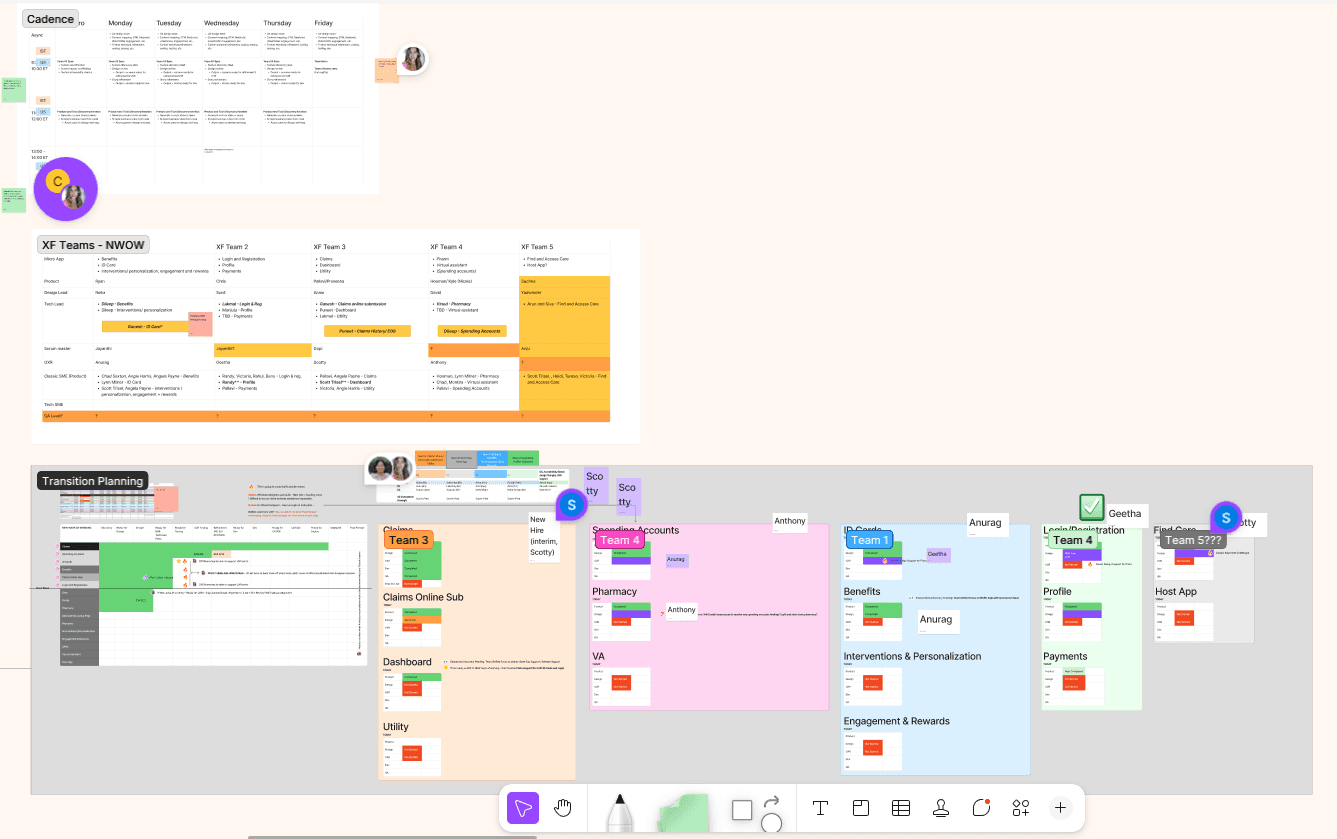
Polaris was a large-scale, cross-functional initiative involving multiple teams working in parallel across product, design, and engineering. Collaboration and alignment were critical to ensuring consistency across the unified platform.
Core Team
UX Lead (Strategic leadership, experience direction, cross-team alignment)
Product Managers (Business requirements and prioritization)
Engineering Leads (Architecture and technical implementation)
UX Designers (Feature and experience design across micro-applications)
UX Researchers (User insights and validation)
Extended Team
Design System Team (Shared components and patterns)
Content Strategists (Messaging and experience consistency)
Accessibility Specialists (Compliance and usability standards)
QA Teams (Validation and testing across experiences)
Architecture & Platform Teams (Unicode migration and platform modernization)
Ways of Working
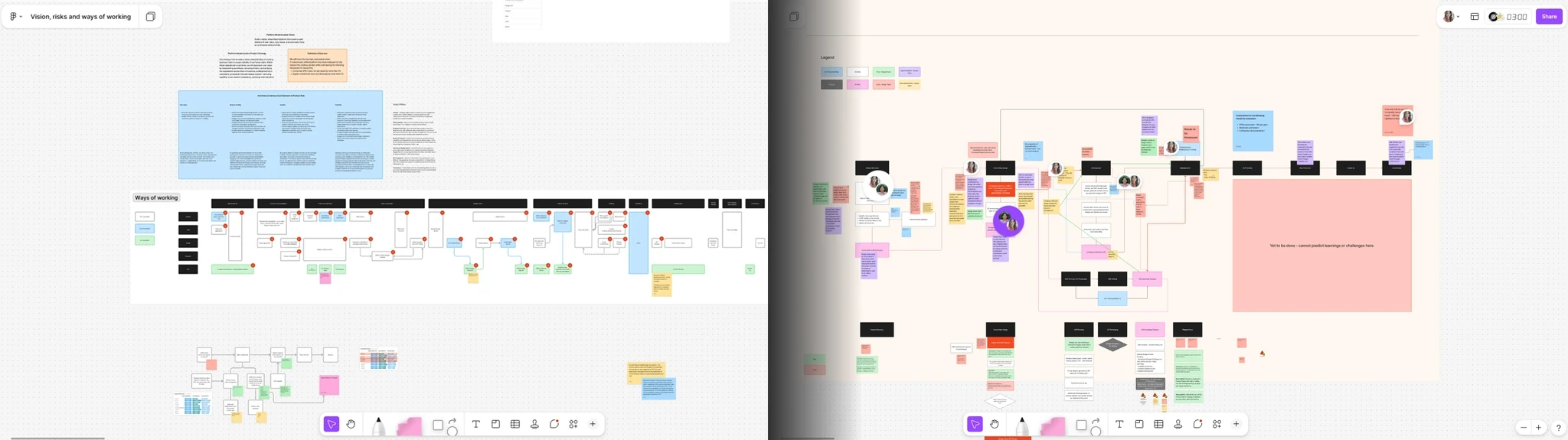
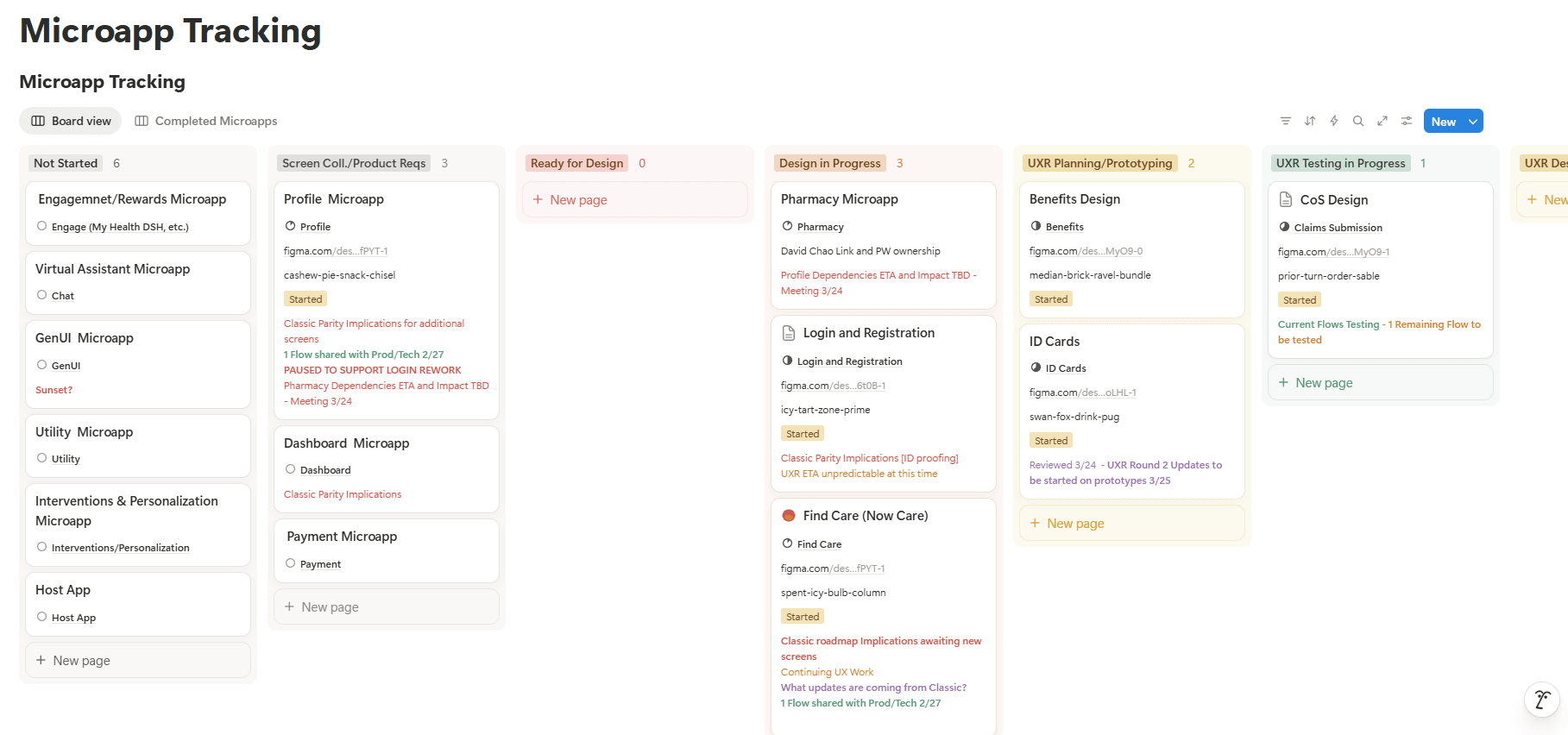
Multiple teams working across micro-applications in parallel
Shared platform architecture and component patterns
Cross-functional collaboration across product, design, and engineering
Regular alignment sessions to manage dependencies and complexity
Objectives
Modernize legacy systems and distributed codebases
Unify two lines of business into a single scalable platform
Reduce operational complexity and improve delivery speed
Establish a Unicode-enabled architecture for future growth
Enable future AI-driven capabilities within the member portal
Improve consistency across the member experience
Minimize regulatory risk while modernizing the experience
Strategic Importance
Polaris was a foundational initiative aimed at enabling long-term scalability, reducing operational complexity, and preparing the platform for future AI-driven capabilities. By modernizing legacy systems and unifying multiple lines of business into a single codebase, the organization could accelerate delivery, improve consistency, and reduce duplication across teams. The initiative also established a flexible architecture designed to support evolving business needs while minimizing regulatory risk, making Polaris a critical step toward building a more intelligent, scalable, and future-ready member experience.
Project Ecosystem
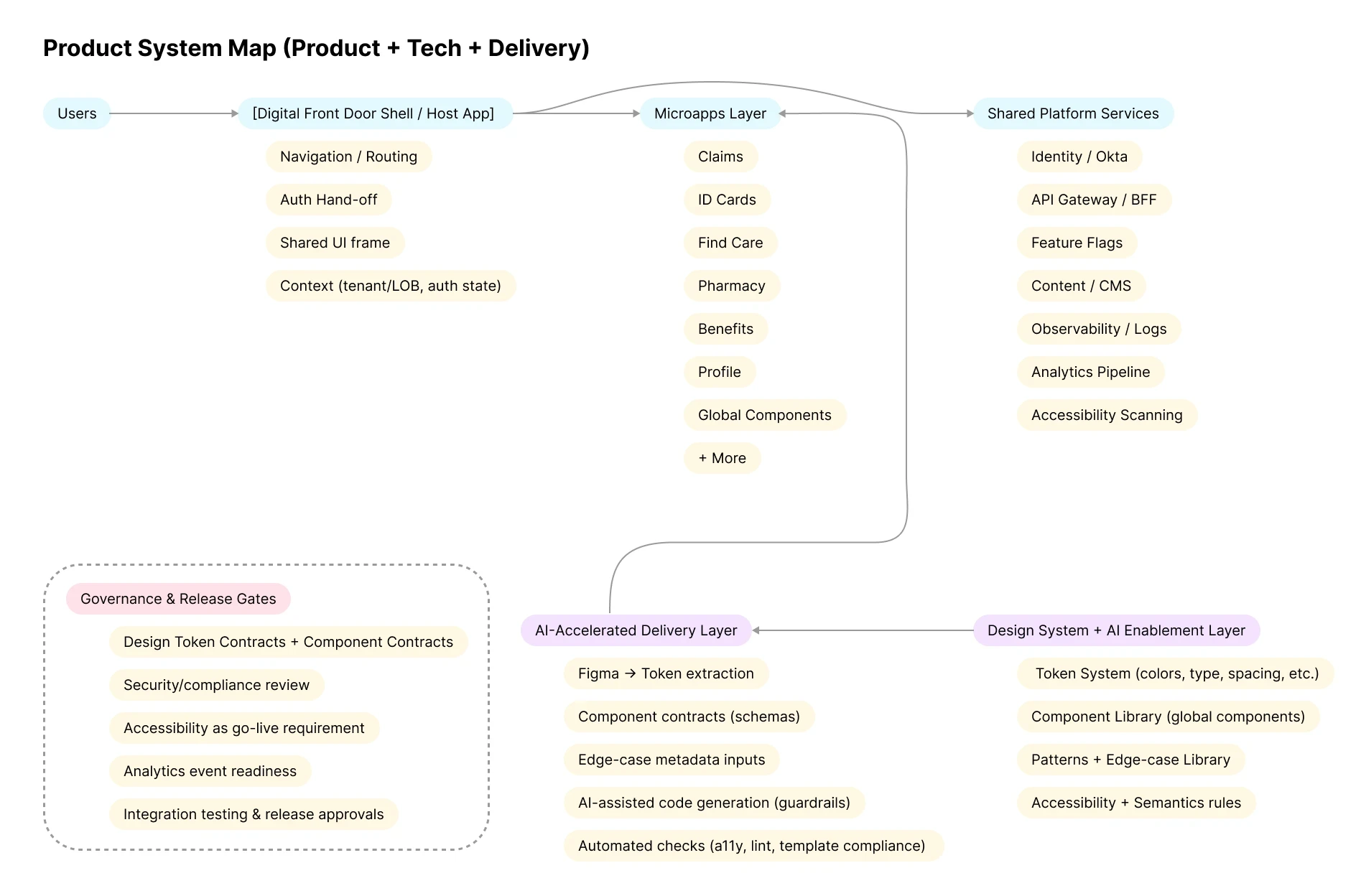
Polaris spanned a complex ecosystem of systems, teams, and business requirements that needed to be aligned within a unified platform. The initiative required coordination across multiple micro-applications, backend services, and lines of business while ensuring consistency, scalability, and regulatory compliance.
Platform Ecosystem
Legacy backend systems and distributed codebases
Unicode-enabled unified platform architecture
Shared design system and component library
AI-enabled SDLC and development workflows
Experience Ecosystem
Multiple micro-applications within the member portal
Two lines of business with distinct requirements
Shared master screens with component-level flagging
Cross-platform experiences across web and mobile
Organizational Ecosystem
Product, design, and engineering teams working in parallel
Architecture and platform teams supporting modernization
Accessibility, content, and QA supporting delivery
Stakeholders across multiple business lines
Constraints & Considerations
State and regulatory requirements
Legacy system dependencies
Cross-team delivery timelines
Future AI readiness and scalability
Key Obstacles
Legacy System Dependencies
Existing backend systems and distributed codebases created technical constraints that limited flexibility and required careful coordination during modernization.Merging Two Lines of Business
Each line of business had unique requirements, workflows, and operational rules that needed to be supported within a single unified platform.Regulatory & State Restrictions
Significant experience changes could trigger state-level regulatory submissions. Solutions needed to be carefully designed to modernize the experience while remaining within approved boundaries to avoid delays and additional compliance overhead.Multi-Tenant Platform Complexity
The platform needed to support multiple business needs within a shared architecture, requiring dynamic component flagging and scalable experience patterns.Cross-Team Alignment at Scale
Multiple teams working across micro-applications required strong coordination, shared standards, and consistent decision-making.Aggressive Timeline
The full portal modernization was targeted within an 18-month timeline, requiring new workflows and accelerated delivery.Introducing AI-Enabled Development Processes
The project introduced an AI-powered SDLC approach, requiring teams to adapt to new structures, naming conventions, and component standards.Balancing Modernization with Stability
The platform needed to evolve without disrupting existing member experiences or business operations.
Project Leadership Philosophy
Polaris required guiding multiple teams through platform-level complexity while aligning business objectives, technical constraints, and user experience across a rapidly evolving ecosystem. My leadership approach focused on creating clarity, building shared understanding, and enabling teams to make confident decisions within ambiguity.
Establish Shared Understanding
I worked closely with designers, product managers, and engineers to clarify how individual features connected to the broader platform. This helped teams understand dependencies, architectural constraints, and long-term objectives, enabling more cohesive decision-making across micro-applications.
Guide Through Complexity
Rather than prescribing solutions, I helped teams break down complex challenges into manageable decisions. By encouraging systems thinking and scalable approaches, teams were able to move beyond feature-level work and contribute to platform-wide consistency.
Mentor and Elevate Team Thinking
I supported designers in shifting from feature-focused execution to platform-level decision-making. This included helping teams navigate tradeoffs, understand business priorities, and consider technical implications across the ecosystem.
Align Strategy with Business Objectives
I partnered with cross-functional stakeholders to ensure experience decisions supported broader business goals, including scalability, operational efficiency, and future AI-enabled capabilities. This helped ensure modernization efforts delivered both immediate and long-term value.
Define Scalable Experience Principles
I helped establish shared platform principles that guided teams toward reusable, flexible solutions capable of supporting multiple lines of business and evolving requirements.
Balance Modernization with Constraints
Polaris required modernizing experiences within regulatory and operational boundaries. I guided teams in navigating these constraints while maintaining forward momentum and minimizing risk.
Foster Cross-Functional Collaboration
I worked closely with product, engineering, and architecture teams to align decisions, manage dependencies, and reduce fragmentation across micro-applications.
Encourage Ownership and Confidence
By helping teams understand the broader ecosystem and the “why” behind decisions, I enabled stronger ownership, more confident decision-making, and more consistent outcomes across the platform.
STRATEGY PRINCIPLES
To guide decision-making across teams and ensure long-term scalability, I established a set of strategic principles that aligned business objectives, technical architecture, and user experience throughout the Polaris initiative.
Platform-First Thinking
Design for a unified platform rather than individual features, prioritizing reusable patterns and scalable solutions that support multiple lines of business.Scalability Through Reuse
Leverage shared components, master screens, and standardized patterns to reduce duplication and accelerate delivery.AI-Ready by Design
Structure components, naming conventions, and design patterns to support AI-enabled development workflows using MCP Server and Cursor.Accelerate Through Standards
Adopt Material 3 as a foundational accelerator to establish consistency across UX and development while enabling faster iteration.Flexibility Within a Unified Framework
Support business-specific needs through component-level flagging while maintaining a shared platform architecture.Modernize Within Constraints
Improve experiences while working within regulatory boundaries to minimize state submissions and reduce delivery risk.Cross-Functional Alignment
Ensure design, product, and engineering decisions were aligned through shared principles and collaborative workflows.Clarity in Complexity
Break down complex systems into understandable structures, helping teams make informed decisions and maintain consistency across the platform.
EXPERIENCE STRATEGY
The experience strategy focused on creating a unified, scalable member portal that supported multiple lines of business while reducing complexity for both users and teams. The goal was to balance consistency, flexibility, and scalability while preparing the platform for future AI-driven capabilities.
Unified Experience Across Lines of Business
Create a cohesive experience that supports multiple lines of business within a shared platform while preserving business-specific needs.Consistency Through Shared Patterns
Leverage Material 3 and a centralized design system to ensure consistent interactions, visual language, and behavior across the portal.Flexible Master Screen Architecture
Establish master screens with component-level flagging to support variations across business lines without duplicating experiences.Reduce Cognitive Load for Users
Simplify navigation, interactions, and workflows to create a more intuitive and consistent member experience.Design for Scalability
Create reusable patterns and components that support future growth and additional features without introducing fragmentation.Enable AI-Driven Experiences
Structure experiences and components to support future AI-driven capabilities and intelligent workflows.Cross-Platform Alignment
Ensure consistency across web and mobile experiences through shared patterns and platform-level thinking.
PLATFORM STRATEGY
The platform strategy focused on creating a unified, scalable foundation that reduced fragmentation, supported multiple lines of business, and enabled future AI-driven capabilities. The approach prioritized shared architecture, reusable components, and AI-enabled development workflows to accelerate delivery and maintain consistency across teams.
Unified Codebase Architecture
Consolidate legacy systems and distributed codebases into a single Unicode-enabled platform to support scalability and future growth.Multi-Tenant Platform Design
Support multiple lines of business within a shared architecture using component-level flagging and flexible experience patterns.Master Screen Framework
Establish master screens to manage variations across business lines while maintaining consistency and reducing duplication.Material 3 as a Platform Accelerator
Adopt Material 3 to standardize UI patterns, accelerate design and development, and create a consistent experience foundation.AI-Enabled Development Infrastructure
Leverage Figma MCP Server and Cursor to support AI-assisted workflows, improving efficiency across design and engineering.Design System Optimization for AI
Define component structures, naming conventions, and contextual metadata to support MCP Server and Cursor integration.Scalable Component Architecture
Create reusable components and patterns to reduce fragmentation and support future expansion.Regulatory-Aware Platform Design
Design within state and regulatory boundaries to enable modernization while minimizing the need for approvals.
The Execution
Execution focused on translating the platform strategy into scalable, actionable patterns that teams could adopt across the member portal. This required coordinating multiple teams, introducing new workflows, and establishing structures that supported both modernization and future AI-driven development.
Platform Foundation & Architecture
We began by defining the unified platform structure, consolidating legacy experiences into a shared Unicode-enabled codebase. This established the technical and experience foundation needed to support multiple lines of business within a single platform.
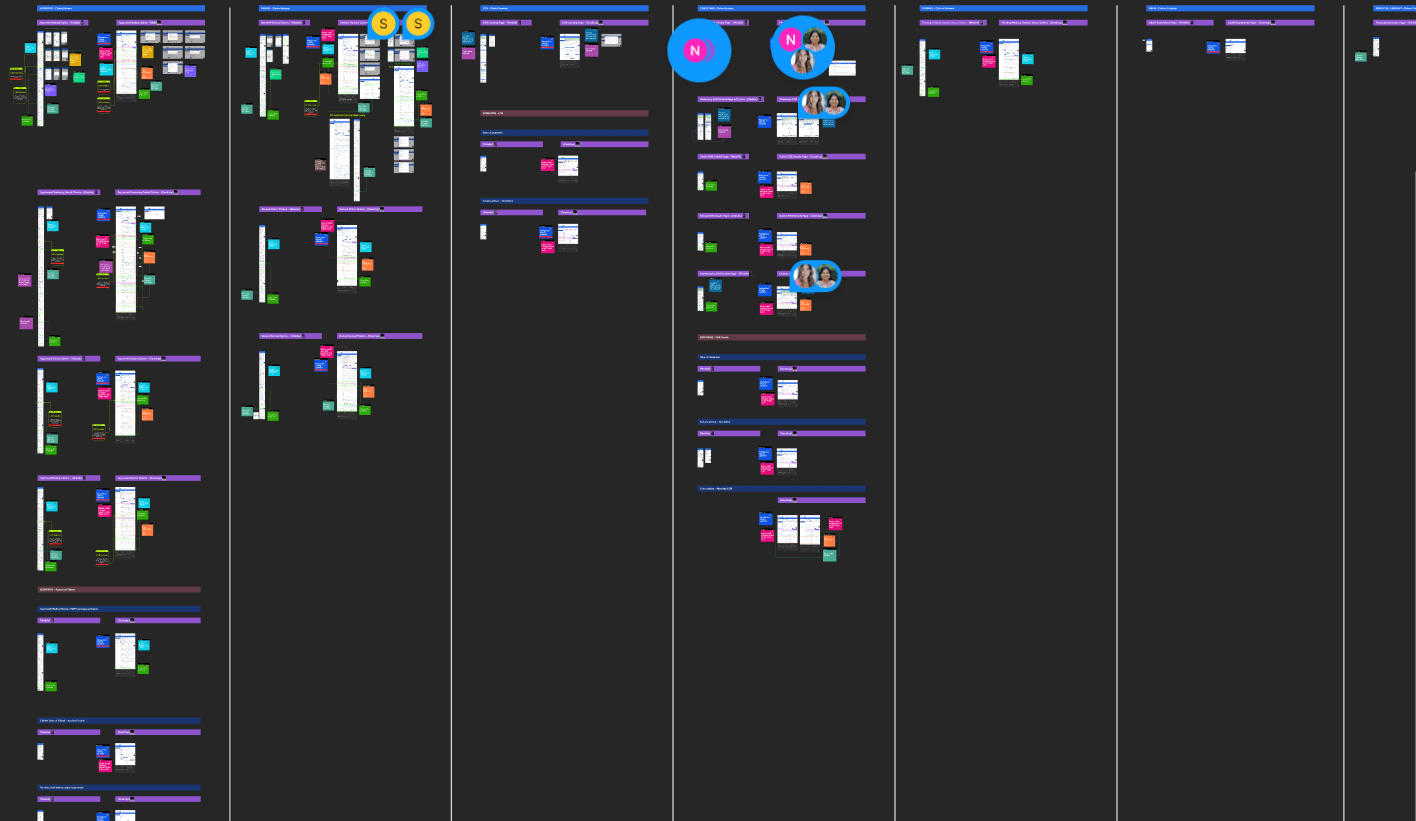
Master Screen Implementation
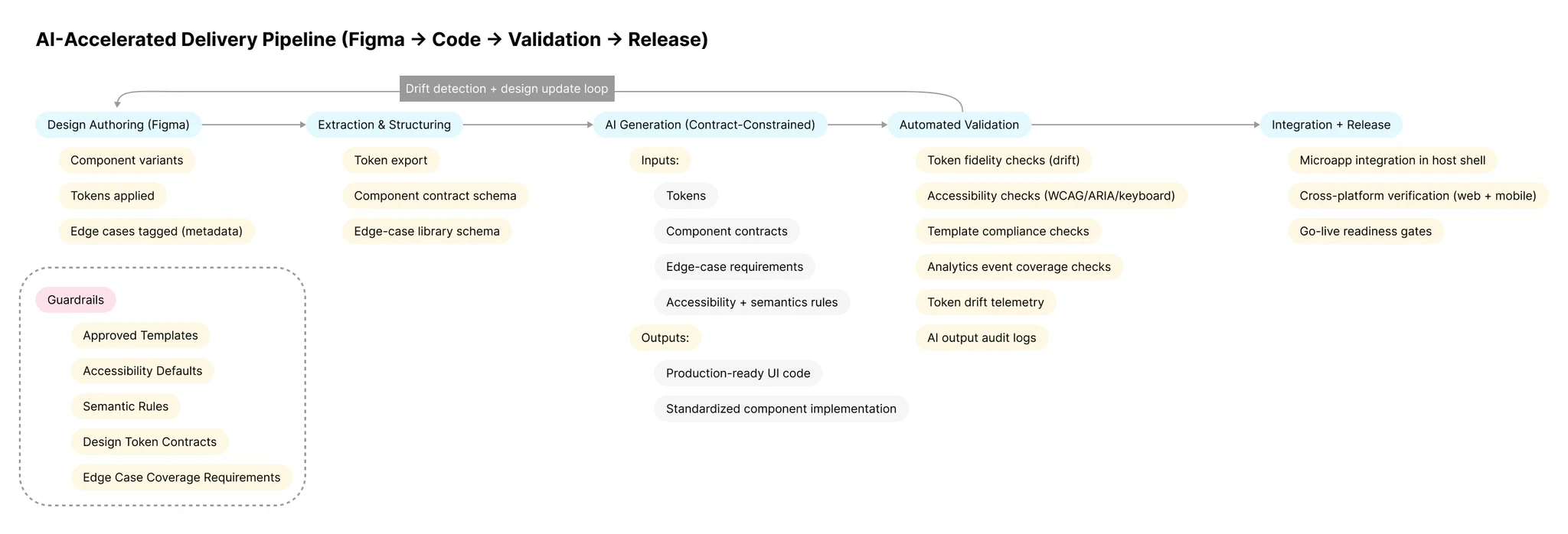
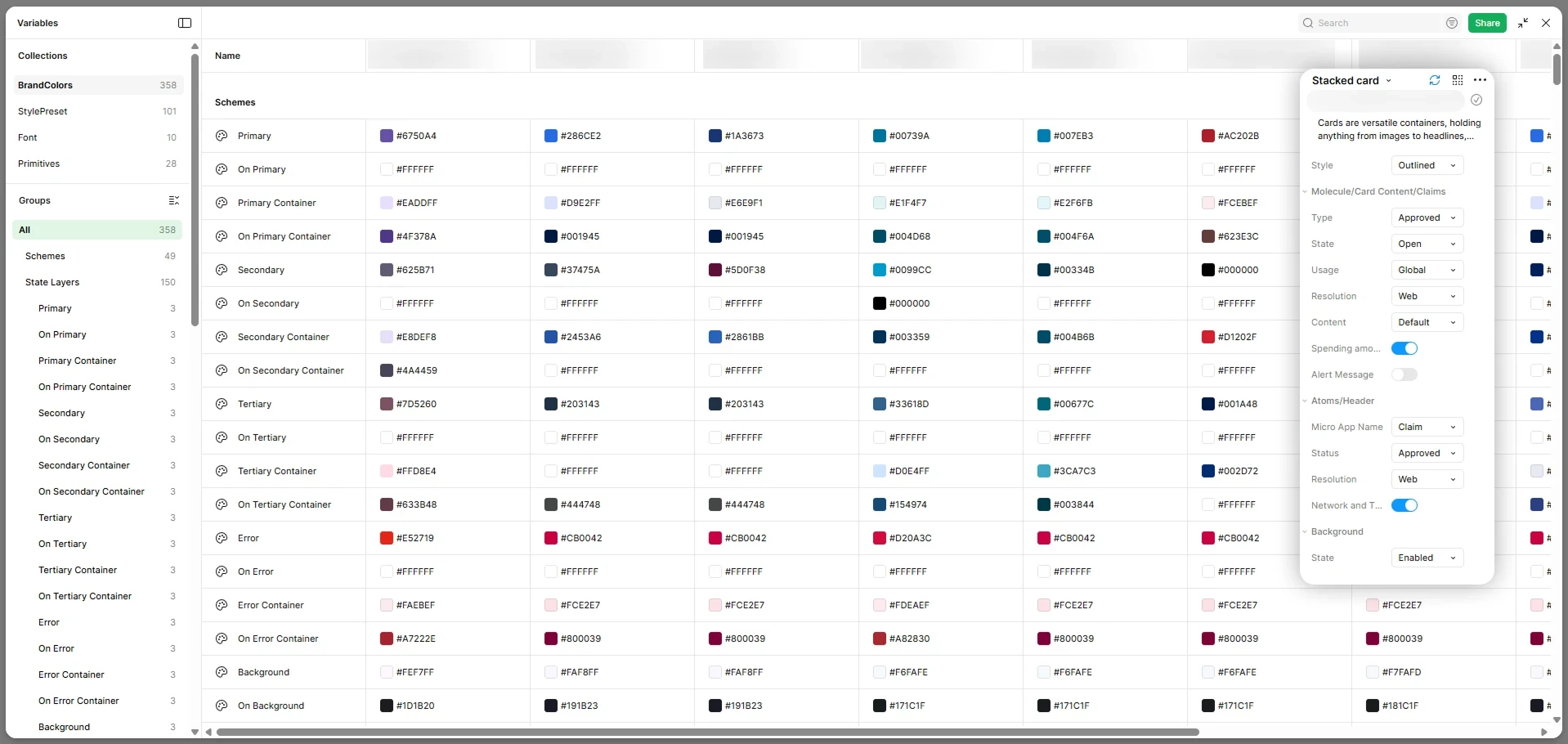
Master screens were introduced to support variations across lines of business while maintaining consistency. Component-level flagging allowed teams to manage business-specific needs without duplicating experiences, reducing fragmentation across the portal.
Material 3 Adoption
Material 3 was established as a core accelerator, providing standardized components and interaction patterns. This improved consistency across the platform and streamlined collaboration between design and engineering.
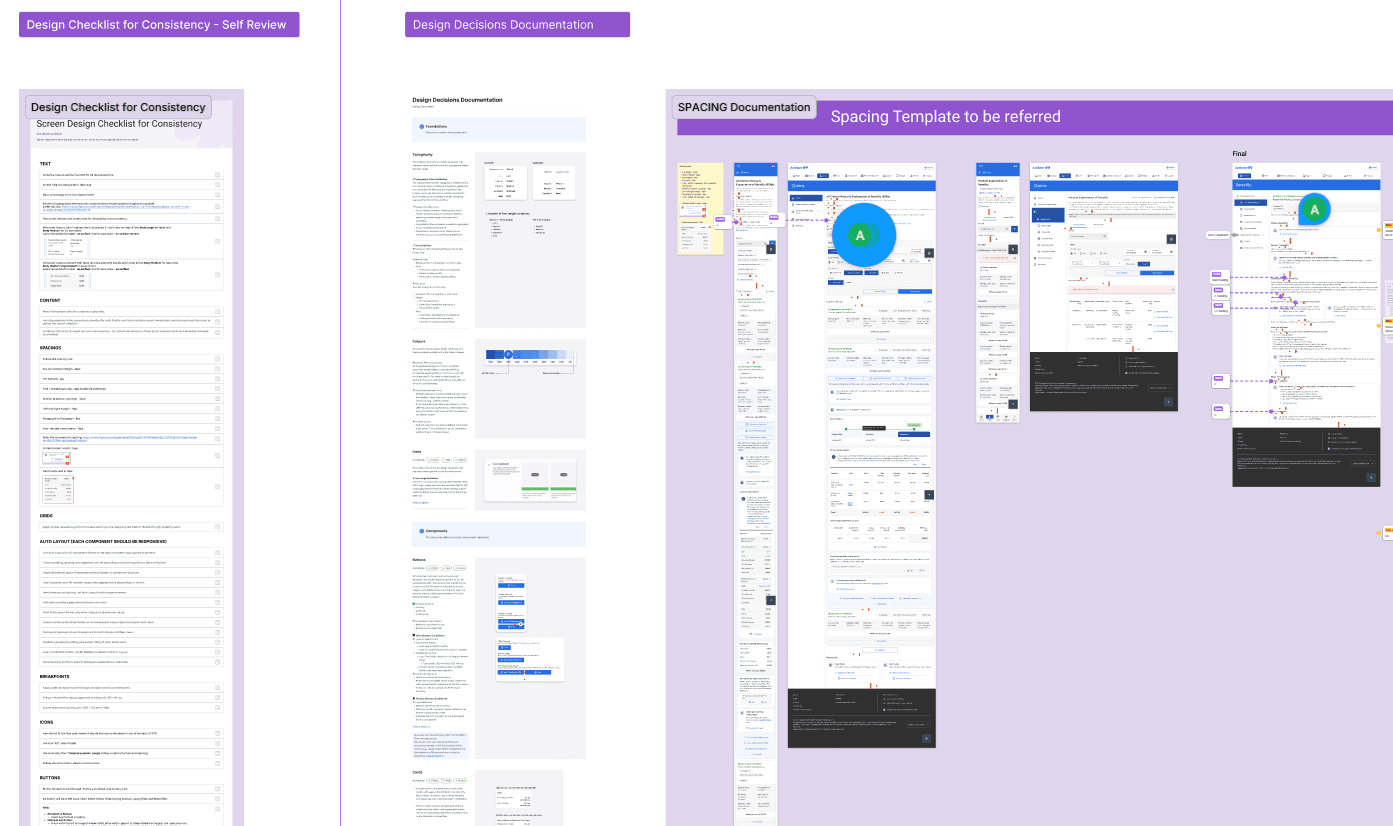
Design System Optimization for AI Workflows
The design system was structured to support AI-enabled workflows using MCP Server and Cursor. This included defining component structures, naming conventions, and contextual patterns to support AI-assisted development.
AI-Enabled SDLC Introduction
Figma MCP Server and Cursor were integrated into the workflow to accelerate design-to-development processes. Teams adopted structured components and master screens to support AI-assisted implementation.
Cross-Team Alignment & Rollout
Patterns and principles were shared across teams, with ongoing alignment sessions to ensure consistency and manage dependencies across micro-applications.
Iterative Modernization Approach
The portal was modernized incrementally, allowing teams to deliver improvements while maintaining stability and working within regulatory constraints.
Key Activities
Defined the platform-first modernization strategy for Polaris
Aligned business objectives, technical architecture, and user experience
Established Material 3 as a shared UX and development accelerator
Introduced master screen architecture to support multi-tenant experiences
Defined component-level flagging to support multiple lines of business
Structured the design system to support MCP Server and Cursor integration
Identified Figma MCP Server and Cursor as AI workflow accelerators
Established best practices for AI-enabled SDLC workflows
Guided teams in transitioning from feature-based to platform-based thinking
Facilitated cross-functional alignment across product, design, and engineering
Mentored designers on systems thinking and scalable design approaches
Defined reusable patterns to reduce duplication and fragmentation
Supported modernization within state and regulatory constraints
Led rollout of shared patterns across micro-applications
Strategic Implementation
AI was introduced as a foundational part of the Polaris strategy to accelerate modernization, reduce operational complexity, and improve scalability across the platform. Rather than being added as a feature, AI was integrated into the development and design workflows to support long-term efficiency and consistency.
Business Need
Accelerate delivery within an aggressive modernization timeline
Reduce operational complexity across multiple teams and systems
Improve scalability across two lines of business
Enable future AI-driven capabilities within the member portal
Establish repeatable, efficient workflows for long-term platform growth
Experience Need
Maintain consistency across multiple teams and micro-applications
Support scalable, reusable experience patterns
Reduce fragmentation across the member portal
Enable flexible experiences for multiple lines of business
Improve collaboration between design and engineering
How AI Fit the Strategy
AI was introduced as an accelerator within the SDLC, not as a standalone feature. Figma MCP Server and Cursor were leveraged to support structured design-to-development workflows, enabling teams to work more efficiently while maintaining consistency across the platform. Master screens, standardized components, and contextual design system patterns were established to support AI-assisted development, ensuring that AI was embedded into workflows rather than layered on top of them.
Outcomes & Impact
Polaris established a scalable foundation for the member portal, enabling the organization to modernize legacy systems, align teams, and support future AI-driven innovation. The initiative improved consistency across experiences, accelerated delivery, and introduced new ways of working across design and engineering.
Business Impact
Unified two lines of business into a single scalable platform
Reduced fragmentation across legacy systems and distributed codebases
Accelerated delivery through shared components and platform patterns
Established a Unicode-enabled architecture for future growth
Minimized regulatory risk by modernizing within approved boundaries
Experience Impact
Improved consistency across the member portal
Reduced duplication through shared master screens and components
Enabled flexible experiences across multiple lines of business
Simplified navigation and workflows for members
Team & Operational Impact
Introduced platform-first thinking across teams
Improved cross-functional alignment between design, product, and engineering
Enabled more efficient collaboration through shared patterns and principles
Mentored teams in systems thinking and scalable design approaches
Innovation & AI Impact
Established Material 3 as a UX and development accelerator
Introduced AI-enabled SDLC workflows using MCP Server and Cursor
Optimized the design system to support AI-assisted development
Created a scalable foundation for future AI-driven capabilities
Reflection and Growth
Polaris reinforced the importance of strategic leadership in navigating large-scale modernization efforts. The project required balancing business objectives, technical constraints, regulatory considerations, and user experience while guiding teams through significant complexity. This experience strengthened my ability to lead at a platform and organizational level, rather than focusing solely on individual features.
Strategic Leadership Growth
This initiative deepened my experience in defining platform-level strategy, aligning cross-functional teams, and establishing scalable foundations for long-term innovation.
Leading Through Complexity
Guiding teams through multi-tenant architecture, regulatory constraints, and AI-enabled workflows reinforced the importance of creating clarity and shared understanding.
AI-Driven Process Innovation
Introducing AI accelerators into the SDLC highlighted the value of structuring design systems and workflows to support emerging technologies.
Scaling Team Thinking
Mentoring designers and cross-functional partners in systems thinking helped elevate decision-making and improve consistency across the platform.
Looking Forward
Polaris shaped my approach to leading modernization initiatives, emphasizing platform-first thinking, AI-enabled workflows, and cross-functional alignment as critical components for building scalable, future-ready experiences.